AI for operationally stretched organisations
Reduce process friction, improve workflow clarity, and identify practical automation opportunities where they matter most.
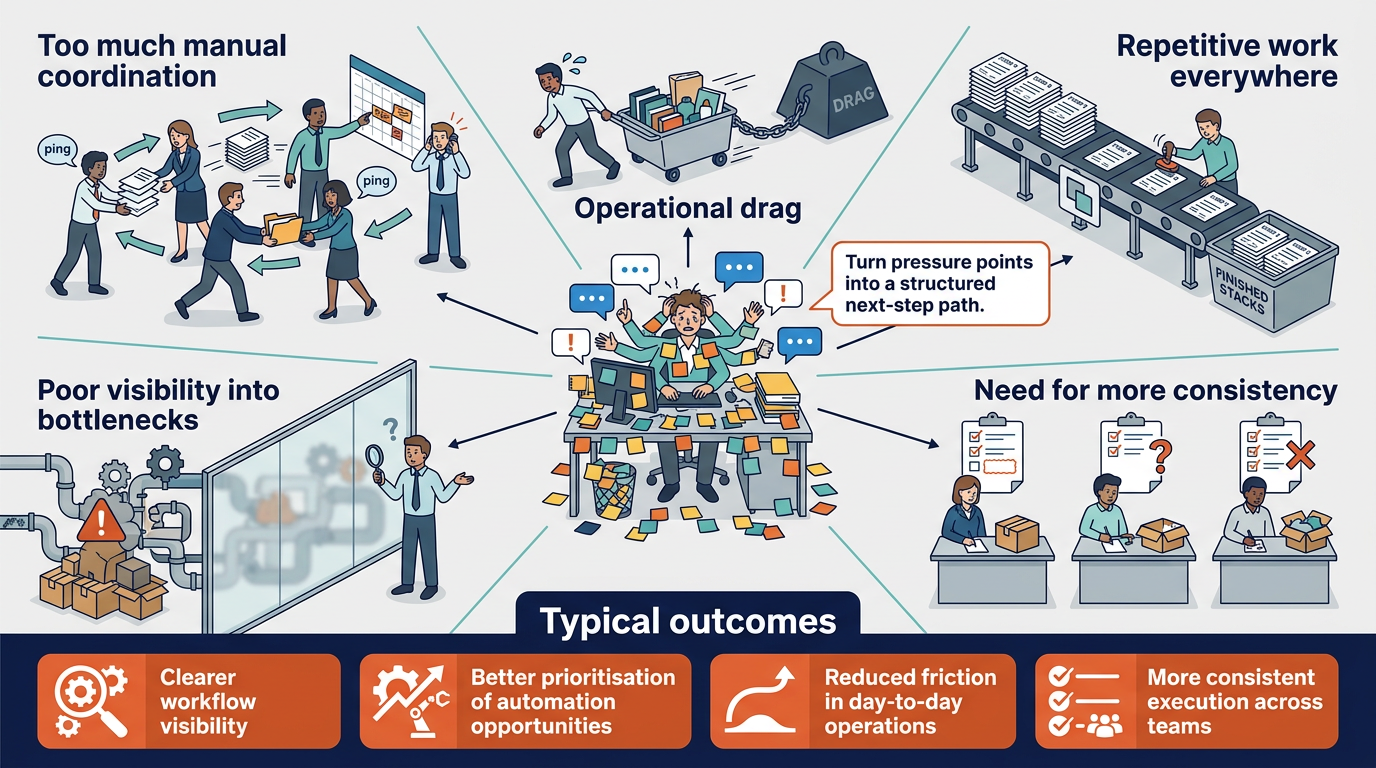
Operational drag rarely comes from one single issue. More often, it comes from repetitive tasks, fragmented handoffs, poor visibility, and too much manual coordination. AI and automation can help, but only when applied to the right workflow realities.
Teams spend time compensating for weak workflows and inconsistent processes.
Low-value tasks absorb time that could be used more strategically.
The business feels friction, but lacks clear insight into where it is being created.
Execution improves when workflows become clearer, simpler, and more repeatable.
The focus is on operational reality: where workflows are breaking down, where effort is being wasted, and what practical changes would create the strongest gains.
Understand where friction, delays, and coordination issues are most visible.
Spot tasks and handoffs that are consuming time without adding proportionate value.
Focus on workflow clarity and automation potential where it matters most.
Turn pressure points into a more structured plan for operational improvement.
Operationally stretched businesses tend to gain clearer workflow visibility, better prioritisation of automation opportunities, reduced friction, and more consistent execution.
Chess Not Checkers explains why smarter integration matters more than chasing superficial AI wins.
Request the Full PDFThe next step should be shaped around your business priorities, operational realities, and where AI can create the clearest practical value.